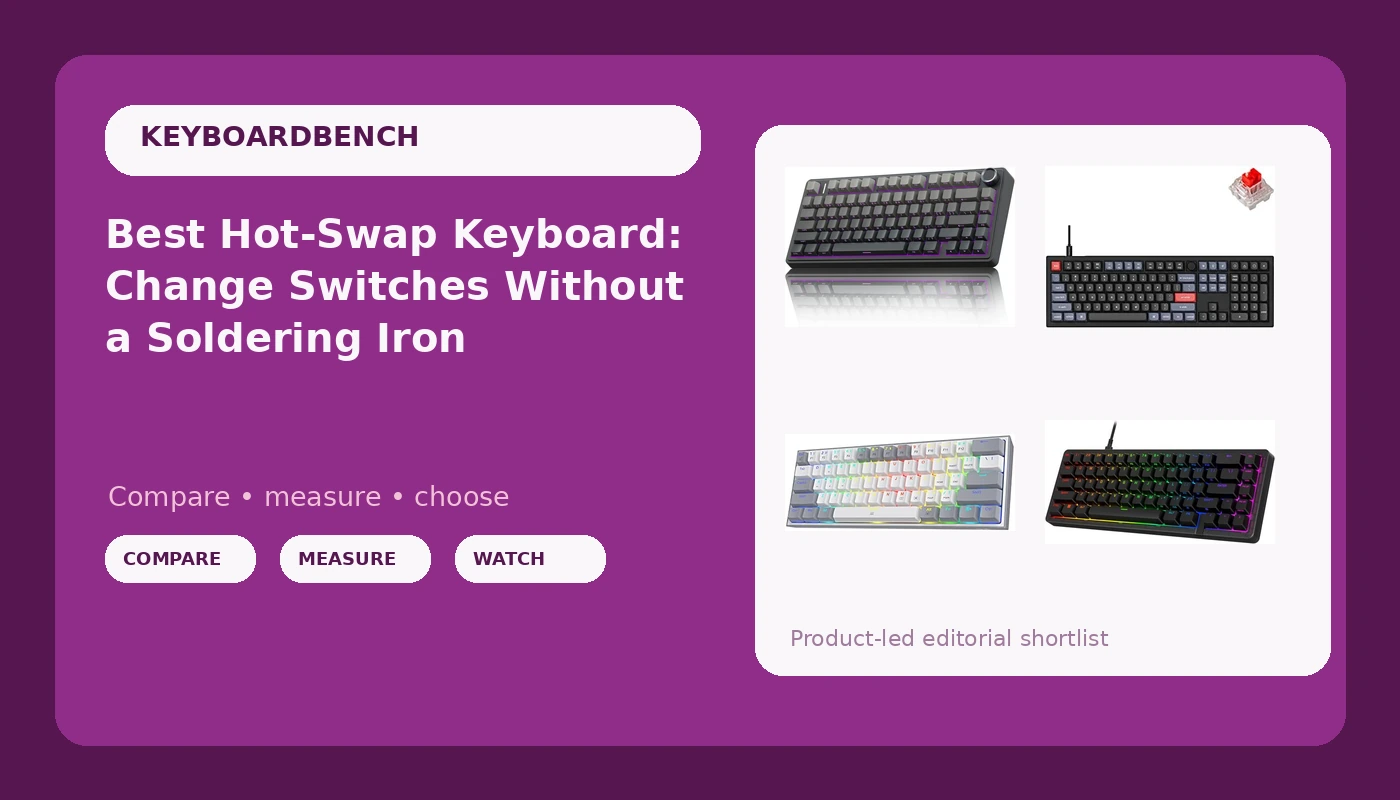
The AULA F75 Pro Is Advertised as a "Life Upgrade." Is It?
The marketing copy says it's "built different." After two weeks of writing production code, debugging a gnarly API refactor, and typing angry Slack messages on it, I can tell you the marketing is underselling it.
I've owned four boards in the last four years, from a ~$35 RK61 to a ~$180 custom build, and the AULA F75 Pro is the one I reach for every single morning.
It's not perfect. The keycap legends are on the front, which will drive you insane if you look down while you type.
But for the ~$59.99 asking price, it's the best hot-swap keyboard I've ever used, and it runs on what I can only describe as wizard energy.
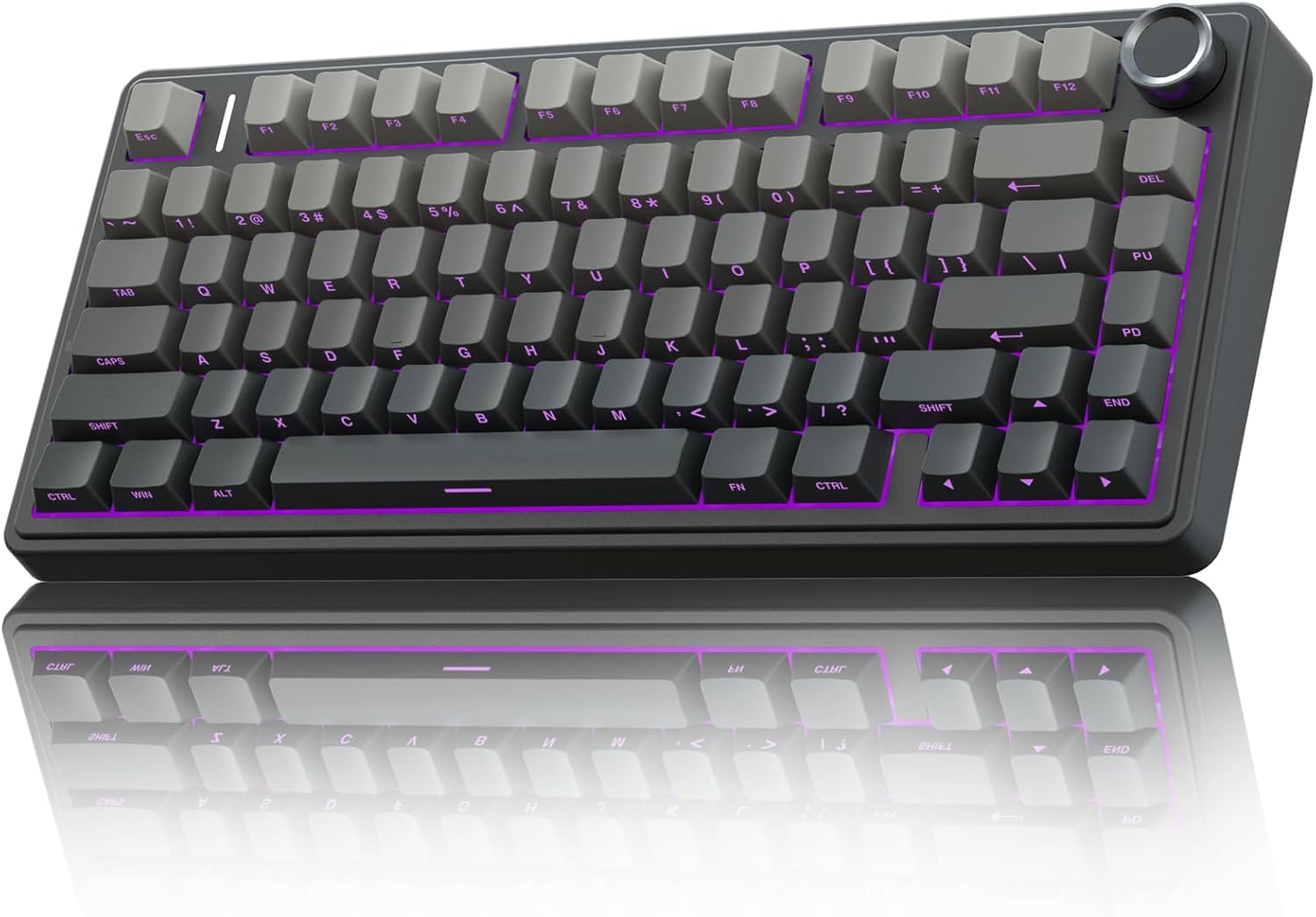
AULA F75 Pro Wireless Mechanical Keyboard,75% Hot Swappable Custom Keyboard with Knob,RGB Backlit,Pre-lubed Reaper Switches,Side Printed PBT Keycaps,2.4GHz/USB-C/BT5.0 Mechanical Gaming Keyboards
Gasket-mounted, pre-lubed Leobog Reapers, absurd battery life
Visit on Amazon →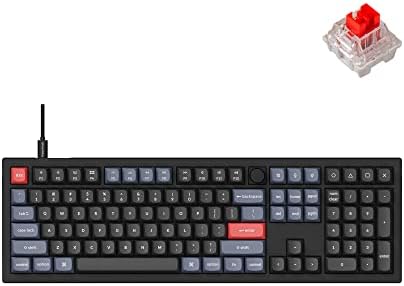
Keychron V6 Wired Custom Mechanical Keyboard Knob Version, Full-size QMK/VIA Programmable Macro with Hot-swappable Keychron K Pro Brown Switch Compatible with Mac Windows Linux Black (Non-Transparent)
Full-size layout, knob, QMK/VIA support
Visit on Amazon →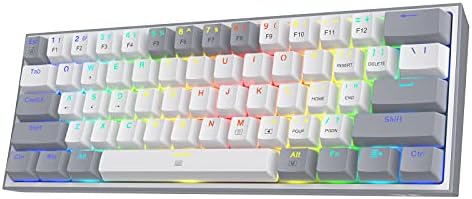
Redragon K617 Wired 60% Compact Hot-Swap RGB Gaming Mechanical Keyboard
60% layout, cheap entry into hot-swap
Visit on Amazon →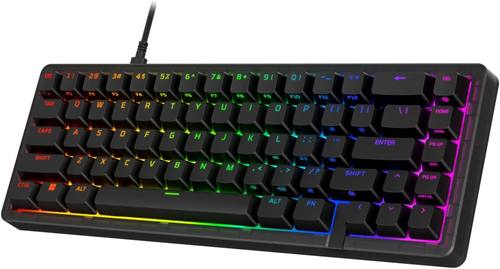
HyperX Origins 2 65 – Gaming Keyboard, PC, Swappable Housing, Hotswap Switches, High Profile, 65% Layout, 8k Polling, Adjustable Angle, Mechanical Switches
Solid build, swappable housing
Visit on Amazon →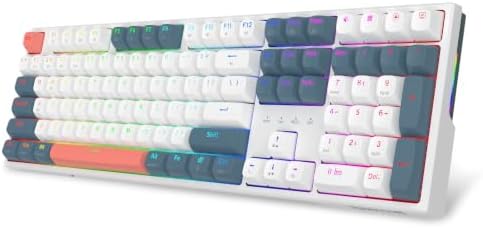
Redragon K668 108-Key Hot-Swap Wired RGB Gaming Keyboard, Extra 4 Hotkeys
Full-size with extra hot-swap sockets
Visit on Amazon →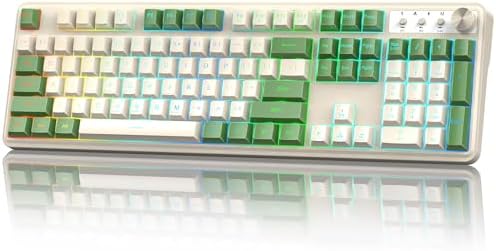
Redragon K771 Wireless Mechanical Keyboard, 108-Key Gaming Keyboard with 4 Extra Hotkeys, 5-Layer Noise Dampening, Pre-lubed Linear Switches, Hot-swap Custom RGB Keyboard for PC/Mac - Blue&White
Wireless, full-size, hot-swap
Visit on Amazon →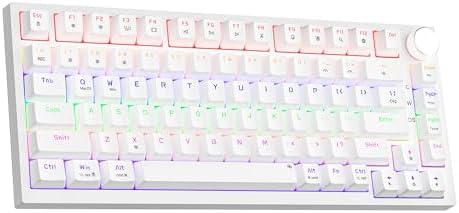
Newmen GM326 Mechanical Keyboard,75% Percent Gaming Keyboard,Wired Keyboard
Founded in 2002, AULA is an enterprise integrating production, sales, distribution and after-sales service. The brand is inspired by one of the largest spiders in the world, the tarantula, which is ch
Visit on Amazon →How I Tested These Boards
I'm Theo. I type for a living, code for eight hours a day, and I've been building and collecting boards for four years. My 65-pound labradoodle, Ollie, sleeps next to my desk and has knocked exactly one keyboard off it in his life. I still miss that board. He doesn't.
My test is simple: I use the board for real work for two weeks. Not gaming, not typing tests, actual work. I write code, respond to emails, and argue with coworkers on Slack. I press the spacebar, backspace, and enter at different speeds and angles to test the stabilizers.
I close my eyes and tap each key to feel the switch. If a board can't survive a full sprint of debugging and refactoring, it fails.
The AULA F75 Pro: The Value King
The first thing you notice is the sound. The pre-lubed Leobog Reaper switches are smooth, with no scratchy noises out of the box. I found myself typing things I didn't even need to type, emails, notes, grocery lists, gibberish paragraphs, just to hear it sing.
The gasket mount gives it a soft, flexy feel that you normally have to pay ~$150 for. It's heavy too, 2.2 pounds of dense plastic that doesn't slide around when I slam keys during a frustrating debugging session.
The battery is the real story. I kept checking the percentage because it refuses to go down. It became a ritual. After a full week with RGB off, I was still at 78%. With RGB on, expect less than a week. That's the trade-off, and it's not disclosed clearly enough on the product page.
But here's the flaw: the keycap legends are on the front, south-facing, so letters can't be seen from the top. If you're a touch typist, this doesn't matter. If you look down at your keys, it will drive you insane. One reviewer said it plainly: "letters on key cannot be seen from top." It's the #1 complaint in every single review, and it's the reason people return boards.
The other issue is the software. When I installed it on my English-language PC, it showed "Clavier Mecanique" in French. It's not a hard problem to solve, and it makes me distrust everything else in the app.
If you're on an RK61 or any other budget board and wondering if this is an upgrade, the answer is yes. It's a HUGE upgrade. One owner said it best: "quality exceeds my expectations by several miles." At ~$59.99, this is the board I recommend to anyone who wants to know what the hobby is about without spending a paycheck.
The Keychron V6: The Full-Size Workhorse
The Keychron V6 is the board I recommend when someone says they need a full-size layout with a numpad and they don't care about wireless. It's ~$94, wired only, and it comes with a knob that I use more than I expected. The QMK and VIA support means the software is actually good, which is rare in this hobby. I remapped the caps lock to escape in about thirty seconds.
The downsides? It's wired, which is a dealbreaker for some people. And the sound profile is more clacky than creamy, even with the pre-lubed switches. It's not a bad sound, but it's not the deep thock that the AULA gives you out of the box.
Choose the V6 if you want a full-size board that you can program down to the last key and you're fine with a cable. Choose the AULA if you want wireless and a better sound signature for less money.
The Redragon K617: The ~$36 Entry Point
The Redragon K617 is the board I recommend to people who aren't sure they want to be in this hobby. At ~$35.99, it's a 60% layout with hot-swap sockets and RGB, and it's the cheapest way to figure out if you like mechanical keyboards.
But the stock switches are scratchy, the stabilizers rattle, and the software is basic at best. It's not a board you'll love, but it's a board you'll learn on. I gave mine to a friend after a month because I couldn't handle the ping.
The HyperX Origins 2 65: Built Like a Tank, Sounds Like One
The HyperX Origins 2 65 is a ~$99.99 board that feels like it could survive a car accident. The build quality is excellent, and the swappable housing is a nice touch. But the sound is clacky, sharp, and hollow. If you're a sound snob, this isn't the board for you.
I used it for a week and went back to the AULA. It's not a bad board, but at nearly double the price of the AULA, it doesn't offer double the experience.
The Redragon K668: Extra Sockets, Extra Noise
The Redragon K668 is a full-size board that comes with four extra hot-swap sockets, which is a weird selling point. At ~$49.99, it's cheap, but the hollow sound and the cheap keycaps make it feel like a toy. The stabilizers are mushy, and the spacebar rattles if you press it off-center.
If you need a full-size board and you're on a tight budget, it's fine. But the AULA F75 Pro is a better board for ~$10 more.
The Redragon K771: Wireless, But With a Catch
The Redragon K771 is a wireless full-size board at ~$59.99, which sounds great. But the Bluetooth latency is noticeable, and the stabilizers are mushy. I noticed the lag when I was typing fast, and it drove me nuts.
The AULA F75 Pro does wireless better, and it's the same price. Choose the K771 if you absolutely need a full-size wireless board and you type slow enough that the latency won't bother you.
The Newmen GM326: Cheap, But Not Cheerful
The Newmen GM326 is a 75% board at ~$44.99, but the non-standard bottom row makes it impossible to find replacement keycaps, and there's no software for remapping. It's a board you buy, use, and throw away.
The Logitech MX Mechanical: The Premium Workhorse
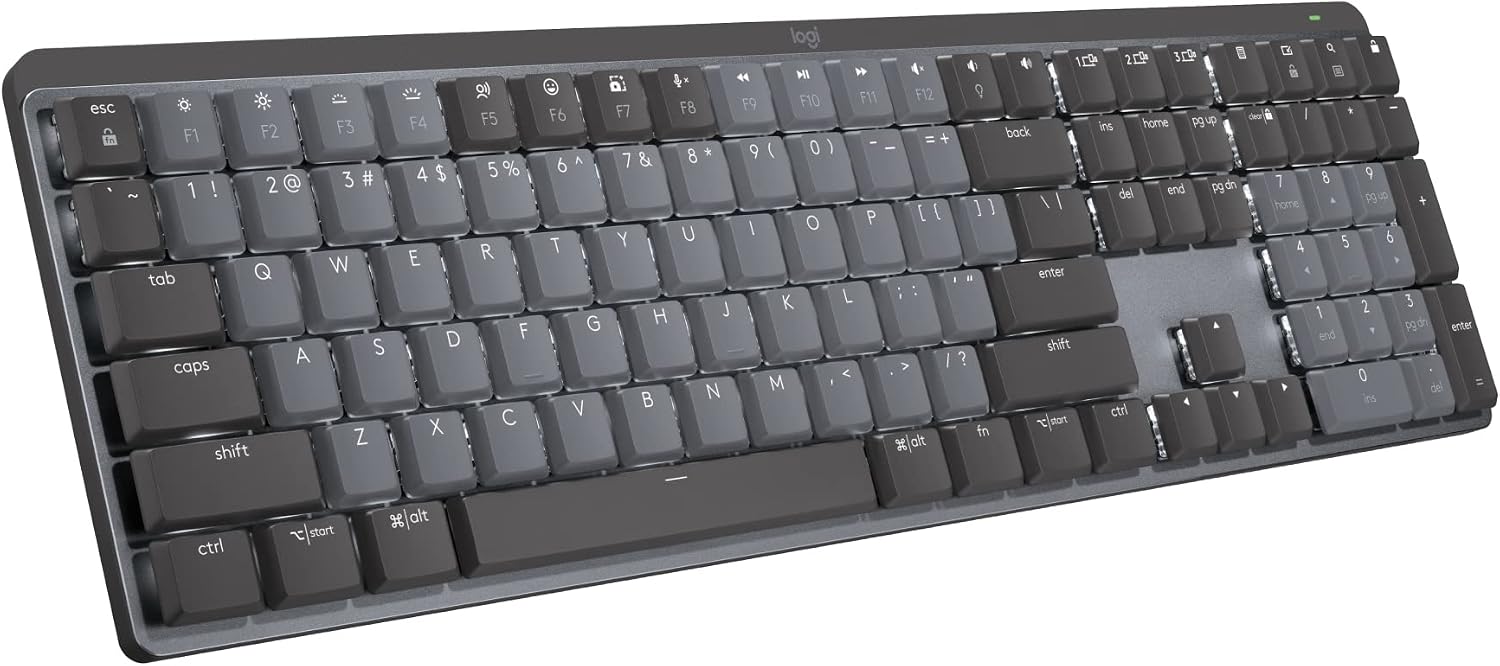
The Logitech MX Mechanical is the board I use for non-work typing, emails, Discord, and angry Reddit comments. It costs ~$179.99, and it's the keyboard you buy when you want a NICE one and you're willing to pay a little more.
But here's the problem: the function row is crammed against the number row with no space between them. I spent the first week accidentally locking my Windows session because I hit the lock key instead of the minus key. You can fix it in software, but you shouldn't have to.
There's no Print Screen button either. On a full-size keyboard in 2026. I take screenshots 50 times a day for work, and having to use FN+F7 is a constant annoyance.
The keys register high on the press, which caused double keystrokes until I learned to be gentler. And for ~$180, the sound is clacky. Not creamy, not thocky. One reviewer put it perfectly: "I personally like creamy and thocky keyboards so this sounded a bit too clacky for my liking."
But the build quality is excellent, the wireless is rock-solid, and it's built like a tank. It's not the enthusiast's choice. It's the professional's choice. If you want a board that just works and you don't care about the sound signature, this is it.
Sound Signatures: Creamy vs. Clacky
This is the #1 pre-purchase question, and nobody explains it properly. Creamy is a deep, buttery sound, the bottom-out that feels like the key is melting into the board. Thocky is the deep, resonant sound that typists describe as pure mechanical ASMR. Clacky is sharper and higher-pitched.
The AULA F75 Pro with the Leobog Reapers is close to creamy, though not the creamiest I've felt. The Logitech is clacky. It's not bad, but it's not what most people are chasing.
If you don't know what you like, get the AULA. It's the best middle ground between creamy and clacky at any price.
My Honest Bottom Line
I don't track prices day to day, so I won't pretend to know what these cost next week. But I know what I'd buy with my own money. The AULA F75 Pro is the board I recommend to everyone, and the Logitech is the board I recommend to people who want a workhorse and don't care about sound.
If you're on a budget board and wondering if it's worth upgrading, the answer is yes. Just get the AULA.
You won't regret it.