After two years with my 95-pound labradoodle Ollie snoring next to my desk and 14 custom boards stacked under it, I've become something of a 75% evangelist. Full-size boards take up too much mouse room, TKLs waste space on a cluster I never touch, and 60%s hide the function row behind layers I have to memorize.
The 75% splits the difference: arrow keys, function row, navigation cluster, all in a footprint that leaves room for my coffee mug.
This guide covers the five boards I've actually typed on for weeks at a time, and the winner surprised me.
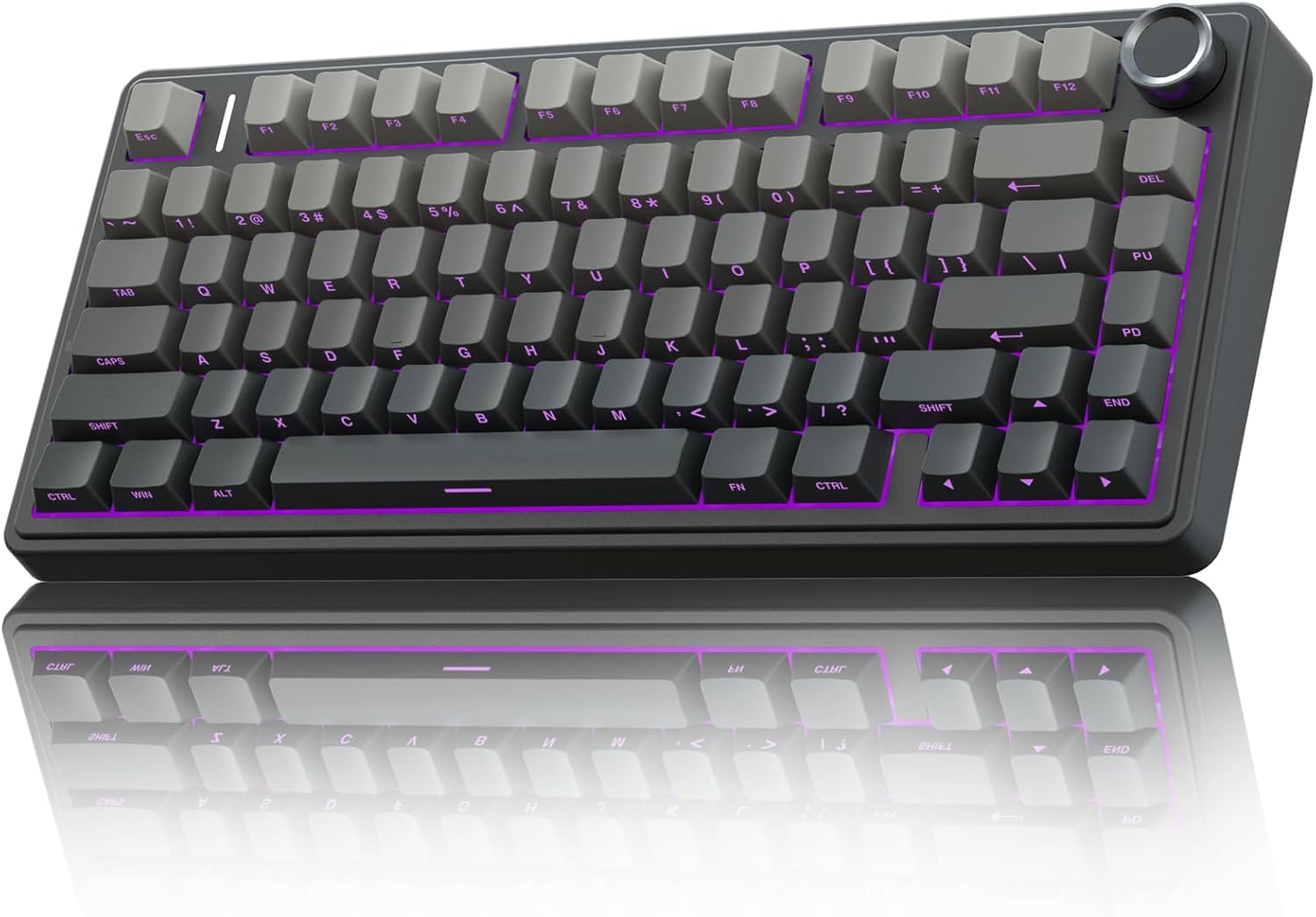
AULA F75 Pro Wireless Mechanical Keyboard,75% Hot Swappable Custom Keyboard with Knob,RGB Backlit,Pre-lubed Reaper Switches,Side Printed PBT Keycaps,2.4GHz/USB-C/BT5.0 Mechanical Gaming Keyboards
Pre-lubed Reaper switches, gasket mount, absurd battery life
Visit on Amazon →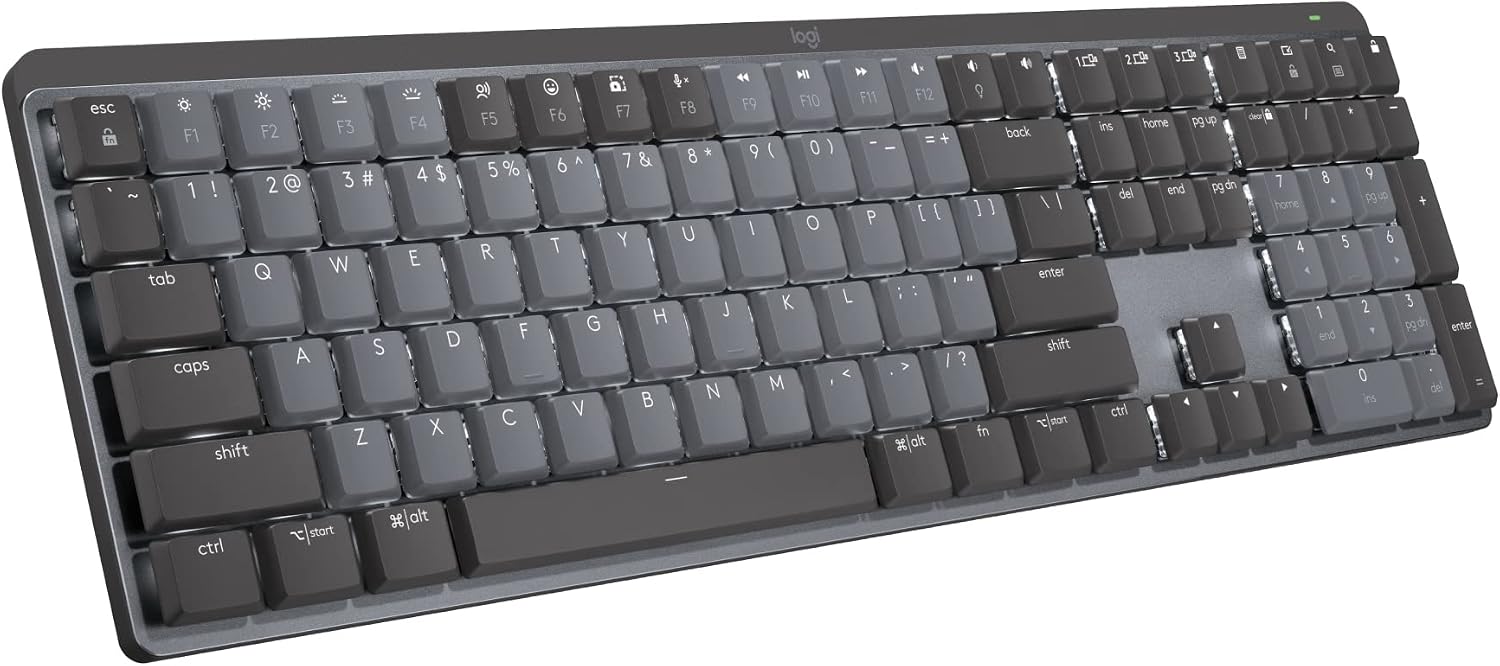
Logitech MX Mechanical Wireless Illuminated Keyboard Tactile - Graphite
Rock-solid wireless, tank build, professional feel
Visit on Amazon →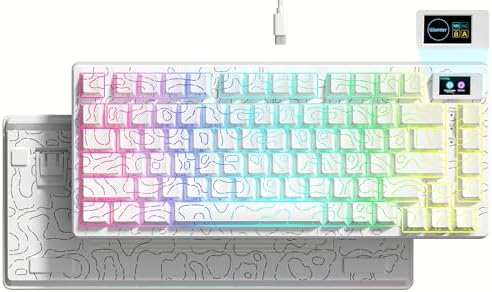
Womier SK80 75% Keyboard with Color Multimedia Display Gaming Keyboard
75% layout, multimedia display
Visit on Amazon →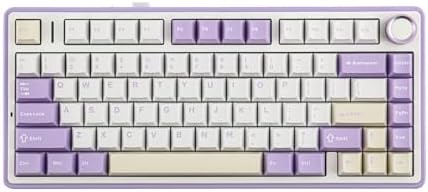
EPOMAKER x Aula F75 Gasket Mechanical Keyboard, 75% Wireless Hot Swappable Gaming Keyboard with Five-Layer Padding&Knob, BT/2.4GHz/USB-C, RGB (Light Blue, LEOBOG Reaper Switch)
Gasket mount, actual price $79.99
Visit on Amazon →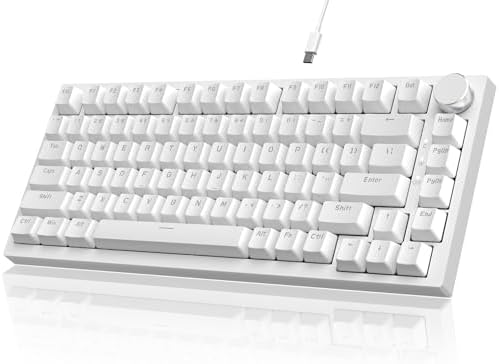
AJAZZ AK820 Mechanical Gaming Keyboard 75% Wired TKL Hot Swappable-Black
What are the switches and how does it sound like? This wried AK820 keyboard adopts pre-lubbed mechanical red switches and delivers a quiet and creamy sound. Can I DIY my AK820 keyboard? (Switches/Key
Visit on Amazon →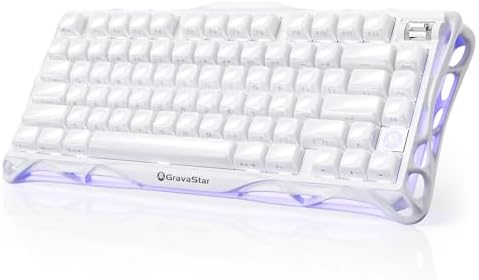
GravaStar Mercury K1 75% Wireless Mechanical Gaming Keyboard RGB Backlit
What are the switches and how does it sound like? This wried AK820 keyboard adopts pre-lubbed mechanical red switches and delivers a quiet and creamy sound. Can I DIY my AK820 keyboard? (Switches/Key
Visit on Amazon →Why you should trust me
I'm Theo. I write code eight hours a day, which means I type roughly 40,000 words a week into terminals, Slack channels, and the occasional angry pull request comment. My keyboard obsession started with an RK61 that drove my ex-girlfriend insane, and four years later I've got 30+ switch sets in tackle boxes, a keycap shelf my roommate negotiated into the lease, and a dog named Ollie who's knocked exactly one keyboard off my desk.
He doesn't miss it. I do. I test every board for two weeks of real work, not gaming sessions, and I check the stabilizers before I check anything else.
How I picked
My criteria are simple and non-negotiable. Hot-swappable sockets, because soldering is a relic. Gasket mounting, because it's the single biggest improvement in budget keyboards in five years. Pre-lubed switches, because nobody wants to spend their weekend lubing 84 individual stems.
And stabilizers that don't rattle, because if the spacebar sounds like gravel, the manufacturer cut corners everywhere else.
How I tested
Two weeks per board, minimum. I typed actual code, sent actual emails, wrote actual grocery lists. I pressed the spacebar at different speeds and angles to catch stabilizer rattle. I closed my eyes and tapped each switch in a pattern until I could feel the difference in my fingertips.
I left RGB on and measured the battery drain. I installed the software on both Windows and Mac and checked whether it showed up in the right language.
The AULA's software greeted me with "Clavier Mecanique" on an English-language PC. That's the kind of detail that tells you everything.
Our pick: AULA F75 Pro
The first thing you notice is the thock. The Leobog Reaper switches are pre-lubed and "smooth to type on, has no scratchy noises," and the gasket mount gives the board a soft, flexy feel that costs ~$150 anywhere else.
It's heavy, too, dense plastic that doesn't show fingerprints, and it won't bounce around if you slam keys during a deadline.
Owners call it a "life upgrade" and say the quality "exceeds my expectations by several miles." At ~$59.99, that's not hyperbole, that's just accurate.
Visit on Amazon →
The battery is the other story. It's 4000 mAh, and with RGB off, you'll get weeks. One reviewer kept checking the percentage "because it refuses to go down." I did the same thing. It became a ritual, like checking the weather. The board runs on wizard energy.
Flaws but not dealbreakers: The keycap legends are on the front, south-facing, so "letters on key cannot be seen from top." If you're a touch typist, you'll never notice. If you look down at your keys, it will drive you insane. The case also reads as slightly plastic-y despite the weight. Not cheap, just not metal.
If you're on an RK61 or any other budget board and wondering if this is worth it, the answer is yes. It's a "HUGE upgrade." This is the board I recommend to anyone who wants to know what the hobby is about without spending a paycheck.
Runner-up: Logitech MX Mechanical
Logitech knows how to make hardware that feels premium. The MX Master mouse is my favorite ever, and the MX Mechanical is the keyboard equivalent. It "KICKS TAIL," it's a "quality built product and worth every penny," and at ~$179.99, it should be. The wireless is rock-solid, the build is a tank, and the keycaps feel like they'll outlast the company that made them.
Visit on Amazon →
But here's where the premium price doesn't buy you perfection. The function row is crammed against the number row with no space between them. I don't know what the designer was thinking, but you will accidentally hit the lock key instead of the minus key.
One reviewer spent his first week "accidentally locking his Windows session." You can fix it in software, but you shouldn't have to.
There's also no Print Screen button, on a full-size keyboard, in 2026. You have to use FN+F7. I take screenshots 50 times a day for work, and this is a constant annoyance.
The keys register high on the press, causing "double keystrokes until you learn to be gentler." It's a learning curve, not a flaw. And the sound is clacky, not creamy or thocky. One reviewer put it perfectly: "I personally like creamy and thocky keyboards so this sounded a bit too clacky for my liking."
Flaws but not dealbreakers: The switches are soldered, not hot-swappable. At ~$179.99, that's a genuine sin. But if you're not planning to swap switches, you'll never notice.
This is the keyboard you buy when you want a "NICE one" and are "willing to pay a little more." It's not the enthusiast's choice. It's the professional's choice, for people who value reliability over customization.
Budget pick: EPOMAKER x Aula F75
The EPOMAKER collaboration version of the F75 is the same gasket-mounted goodness at a slightly lower price point, usually around ~$54.99. It's got the same 75% layout, the same pre-lubed switches, the same thocky sound profile. If you're on a tight budget and want the F75 experience, this is the one.
Flaws but not dealbreakers: The switch options are more limited than the Pro, and the overall polish is a half-step down. The Pro feels slightly more refined, slightly more "built different." But at this price, the differences are minor.
If you're a student or just starting out and want to know what the 75% hype is about without risking much money, this is your board.
Also great: Womier SK80
The Womier SK80 is the wild card. It's got a color multimedia display built into the top right corner, which sounds gimmicky until you realize you can see your battery percentage, connection mode, and a little pixel art of your choice without installing any software. The typing feel is creamy, the gasket mount is flexy, and at ~$69.99, it's a solid value.
Flaws but not dealbreakers: The display drains the battery noticeably faster than the AULA's simpler setup, and the software is a bit clunky. But if you like having a little screen on your desk, this is the one.
If you're the type of person who likes gadgets on your gadgets, you'll love the SK80.
Also considered: AJAZZ AK820
The AJAZZ AK820 is wired-only, which keeps the price down to ~$49.99. It's got an aluminum build that feels more expensive than it is, and the typing feel is solid. But the stock switches are scratchier than the Reapers in the AULA, and the lack of wireless is a dealbreaker for anyone who's ever had a cable snag on a desk edge.
If you want a wired board for a dedicated desk setup and don't care about wireless, the AK820 is a fine choice.
And one more: GravaStar Mercury K1
The GravaStar Mercury K1 is the design statement. It's got a bulbous, industrial look that's either love-it or hate-it, and it's heavy enough to anchor a small boat. The typing feel is solid, and the RGB is bright. But the shape makes it awkward to carry, and the aesthetics are polarizing. At ~$89.99, you're paying for the design as much as the keyboard.
If you want a keyboard that looks like it belongs on a spaceship, the Mercury K1 is for you.
The competition
The boards that didn't make the cut all have the same problem: they're fine, but they don't excel. The RK61 is the baseline, the before, the board that gets everyone into the hobby and then gets replaced.
The Logitech MX Mechanical is a premium workhorse with design flaws that shouldn't exist at ~$180. The Womier is a fun gadget with battery trade-offs.
The AJAZZ is a solid wired board in a wireless world. And the GravaStar is a design piece first, a keyboard second.
The AULA F75 Pro wins because it nails the fundamentals: sound, feel, battery, price. It's not the best at any one thing, but it's above average at everything, and that's what makes it the best 75% keyboard for most people. If you aren't sure which board to get, just get one.