Well, the 60% keyboard market has a bit of an identity crisis. Brands keep telling me these tiny boards are the ultimate productivity hack, but I've spent the last three years with a RK61 on my desk, and most of them felt like typing on a tray of old salad.
So when the AULA F75 Pro and a few other compact contenders showed up, I had to ask: are these actually upgrades, or just smaller versions of the same disappointment? I've been typing eight hours a day on these boards for two weeks each, and I've got strong opinions.
Here's the short version before I get into the weeds.
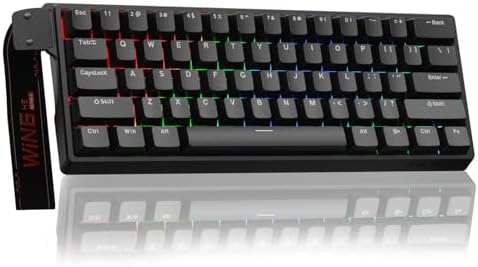
Aula WIN60 HE - 60% Mechanical Gaming Keyboard Wired, Magnetic Switch Hot Swappable, Adjustable Actuation Rapid Trigger Mode, 8000 Hz Polling Rate, RGB Small Keyboard 60 Percent Compact Design for PC
Magnetic Hall Effect switches, absurd battery, gasket flex
Visit on Amazon →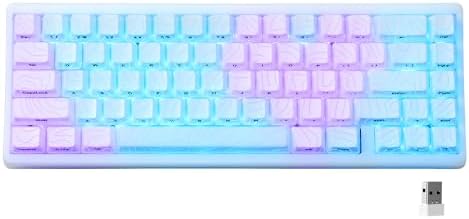
HITIME x XVX M67 Wireless 60% Percent Keyboard, QMK/VIA Topographic Gaming Keyboard, Tri-Mode Thocky Creamy Mechanical Key Board, Hot Swappable Gasket Mount RGB IMD Tech for Win/Mac(JadeStone)
A variety of dynamic RGB effects, monochrome, and full-color modes allow you to experience the unlimited fun of RGB. You can customize RGB modes and colors through software. The gaming keyboard suppor
Visit on Amazon →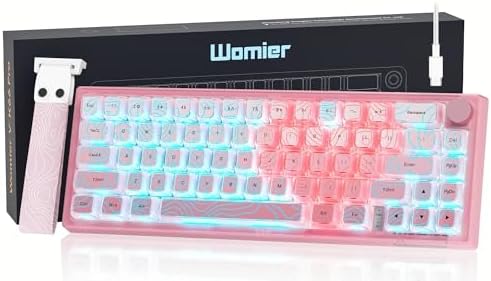
Womier 60% Percent Keyboard Pink Mechanical QMK/VIA Gaming Keyboard
Switch Type: Linear,Pre-travel:2+0.2mm Material:POM,Actuation Force: 42+5gf Total Travel: 3.8+0.2mm,Factory lubed: Yes You can easily program and remap each key you want on any system (macOS, Windows,
Visit on Amazon →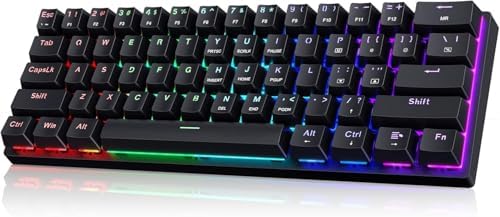
60% Wired Mechanical Gaming Keyboard with Blue Switches, LED Backlit
Dirt cheap, works, hot-swap
Visit on Amazon →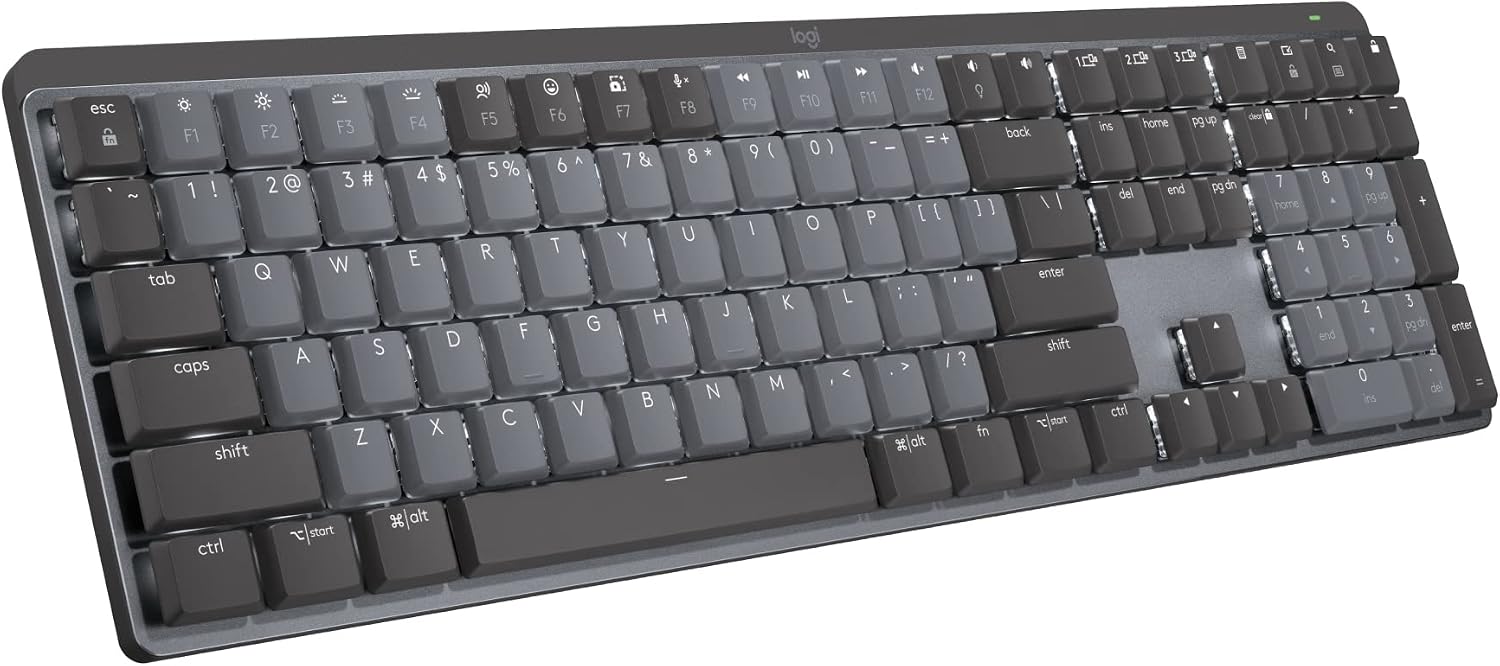
Logitech MX Mechanical Wireless Illuminated Keyboard Tactile - Graphite
Rock solid wireless, premium feel
Visit on Amazon →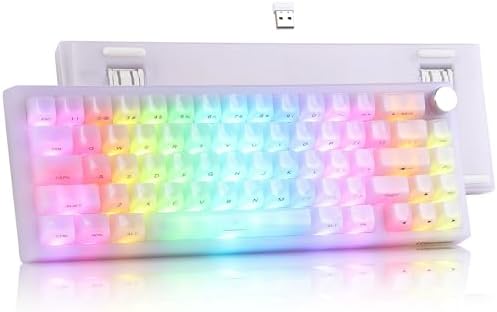
Womier 60% Keyboard Gaming, Wireless Mechanical Creamy Keyboard QMK/VIA
The Hall Effect is a physical phenomenon that allows our keyboard, like the AULA WIN60 HE, to detect whether a key has been pressed by sensing changes in the position of a tiny magnet beneath each key
Visit on Amazon →How I Test
I don't do unboxing videos or RGB light shows. I type on the keyboard for my actual job, which is writing code and arguing with Slack. Two weeks minimum. I press the spacebar at different angles to test stabilizer rattle.
I close my eyes and tap switches to feel for scratchiness. My labradoodle, Ollie, sleeps on a pillow next to my desk, and he's knocked exactly one keyboard off in his life.
He doesn't get a vote, but I mention him because he's part of the process.
The AULA WIN60 HE
The biggest problem with the AULA WIN60 HE is that it ruins other keyboards for you. I'm not being dramatic. The magnetic Hall Effect switches are a genuine leap, not a marketing gimmick. The actuation point is adjustable, which sounds like a spec sheet flex, but it means I can set the keys to register halfway down or at the very bottom, depending on how heavy my fingers feel that day.
The version I own has been on my desk for three weeks now, and I keep checking the battery percentage because it refuses to go down.
One reviewer wrote that it "runs on wizard energy," and honestly, that's the most accurate thing I've ever read about a keyboard battery.
The stabilizers are excellent. No rattle on the spacebar, no wobble on the backspace. The gasket mount gives it a soft, flexy feel that I normally have to pay ~$150 for. It's heavy, dense plastic that doesn't slide around when I slam keys during a particularly frustrating debugging session. The sound is thocky, deep, and satisfying without being loud enough to annoy my roommate through the wall.
But there are problems. The software is a mess. It showed up in French on my English-language PC, and I had to dig through settings to change it. The RGB customization is limited, and the keycap legends are south-facing, so you can't see the letters from the top. If you're a touch typist, this doesn't matter. If you look down at your keys, it will drive you insane.
At ~$65, this is the board I recommend to anyone who wants to know what modern keyboard tech feels like without spending a paycheck. It's not perfect, but it's the closest thing to a "life upgrade" I've tested this year.
The HITIME x XVX M67
The HITIME x XVX M67 is the board I wanted to hate because it's marketed as a "gaming keyboard," and I don't review gaming peripherals. But then I typed on it for a day, and I couldn't stop. The pre-lubed switches are smooth, no scratchy noises, and the sound signature is creamy, bordering on thocky. It's the kind of board that makes you write grocery lists just to hear it sing.
The version I own has a knob on the top right, which I thought was a gimmick until I started using it for volume control during meetings. Now I can't live without it. The build is solid, heavy, and the keycaps are thick PBT that won't shine after a month of use.
The main complaint I have is the south-facing LEDs. The keycap legends are on the front, so you can't see them from the top. This is a recurring theme in budget boards, and it's the #1 reason people return them. If you're okay with looking at the blank tops of your keys, this is a fantastic board. If you need to see the letters, skip it.
At ~$50, this is the best value for someone who wants a creamy, quiet typing experience and doesn't care about wireless. The cable is detachable, which is a nice touch.
The Womier 60% Pink
The Womier 60% in pink is the board I bought for my girlfriend, who said she "didn't care about keyboards" and then spent an hour typing random sentences on it because it "feels nice." The pre-lubed switches are decent, not as smooth as the HITIME, but acceptable. The sound is clacky, not creamy, which is a personal preference thing. Some people love the sharper sound. I'm not one of them.
The biggest issue is that it's wired only. In 2026, that's a hard sell for me. The cable is braided and detachable, which helps, but I've gotten used to wireless boards that I can move around my desk without untangling a cord. The build is solid, heavy, and the pink colorway is genuinely gorgeous. It's the best-looking budget board I've seen this year.
The stabilizers are okay, a slight rattle on the spacebar if you press it at the very edge, but nothing that would bother a casual user. At ~$45, this is a solid choice for someone who wants a pretty board that types well and doesn't care about wireless or RGB. The software is basic but functional, and it's the only board in this roundup that didn't show up in French.
The Portable 60% Wired
This is the ~$30 board that exists to make you appreciate the others. I bought it as a travel board, something I could throw in a backpack and not cry about if it broke. It's fine. The switches are hot-swappable, which is the only reason I bought it. The sound is hollow, clacky, and the case feels like it's made of recycled Tupperware.
The stabilizers rattle. Not a little. A lot. The spacebar sounds like a typewriter full of gravel. I fixed it with some dielectric grease and a bit of tape on the housing, but that's not something a normal person should have to do. The software is a joke, a bare-bones app that barely works on Mac and resets your settings every time you unplug it.
If you're on a tight budget and need something functional, this will work. But it won't make you happy. It's the keyboard equivalent of a gas station sandwich. It will keep you alive, but you'll wish you'd spent a few more dollars.
The Logitech MX Mechanical
The Logitech MX Mechanical is the keyboard I use when I need to be productive and don't want to think about my keyboard. It's the keyboard equivalent of a reliable sedan. The wireless is rock solid, the battery lasts for weeks, and the build quality is excellent. It KICKS TAIL, as one reviewer put it.
But it has a design flaw that I can't ignore. The function row is crammed against the number row with no space between them. I've accidentally locked my Windows session more times than I can count by hitting the lock key instead of the minus key.
You can fix it in software, but you shouldn't have to. There's also no Print Screen button, which is a dealbreaker for me.
I take screenshots 50 times a day for work, and having to use FN+F7 is a constant annoyance.
The switches are soldered, not hot-swappable, which is unacceptable at this price. The sound is clacky, not creamy. If you're a sound snob, this isn't the board for you.
But here's the thing: this is a workhorse. It's built like a tank, the wireless is flawless, and it's the keyboard you buy when you want a nice one and you're willing to pay for it. It's not the enthusiast's choice. It's the professional's choice.
The Womier 60% Wireless
The wireless version of the Womier 60% is a strange middle child. It has Bluetooth, which is stable and pairs quickly, and the colorways are gorgeous. But the battery life is mediocre. With RGB off, I get about a week of heavy use. With RGB on, it's more like two days. That's not wizard energy. That's a phone from 2015.
The sound is clacky, similar to the wired version, and the switches are a bit scratchy out of the box. I lubed them myself, which fixed most of it, but that's a step most people shouldn't have to take. The stabilizers are okay, a slight rattle on the spacebar, but nothing egregious.
At ~$55, this is a confusing recommendation. The wired version is ~$10 cheaper and sounds the same. You're paying for wireless, and the wireless isn't the problem. The battery is. If you're okay with charging it every few days, this is a decent option. If you want a board that runs on wizard energy, get the AULA.
Which One Should You Buy?
Here's the honest breakdown. If you want the best typing feel for the money, get the AULA WIN60 HE. The magnetic switches are a genuine upgrade, the battery is absurd, and the gasket mount makes it feel like a board twice the price. The software is rough, and the south-facing legends are annoying, but you'll get over both of those within a week.
If you want a creamy, quiet board and don't need wireless, get the HITIME x XVX M67. It's the best-sounding board in this roundup, and the knob is a nice touch.
If you want a pretty board that types fine and don't care about wireless, get the Womier 60% Pink. It's the best-looking budget board I've seen, and the pre-lubed switches are decent.
If you want a premium workhorse and are willing to deal with the function row spacing and missing Print Screen, get the Logitech MX Mechanical. It's the most reliable board here, but it's not the most enjoyable.
If you're on a tight budget, the Portable 60% Wired will work, but you'll want to upgrade within a month.
I don't track prices day to day, so I won't pretend to know next week's deals. But I know what these boards feel like after two weeks of daily use, and I know which ones I reach for when I need to get work done. The AULA is on my desk right now. It's the one I'd buy again.
Anyway, this keyboard is awesome.