After four years and 14 custom builds, I've learned that the budget tier is where manufacturers hide their worst stabilizers and their most creative cost-cutting. But every so often, a board comes along that makes me question why I ever spent ~$64.99 on a gasket-mounted custom.
The AULA F75 Pro is one of those boards. So is the Kisnt KN85. I've spent a month typing on both, and I can tell you exactly which one belongs on your desk.
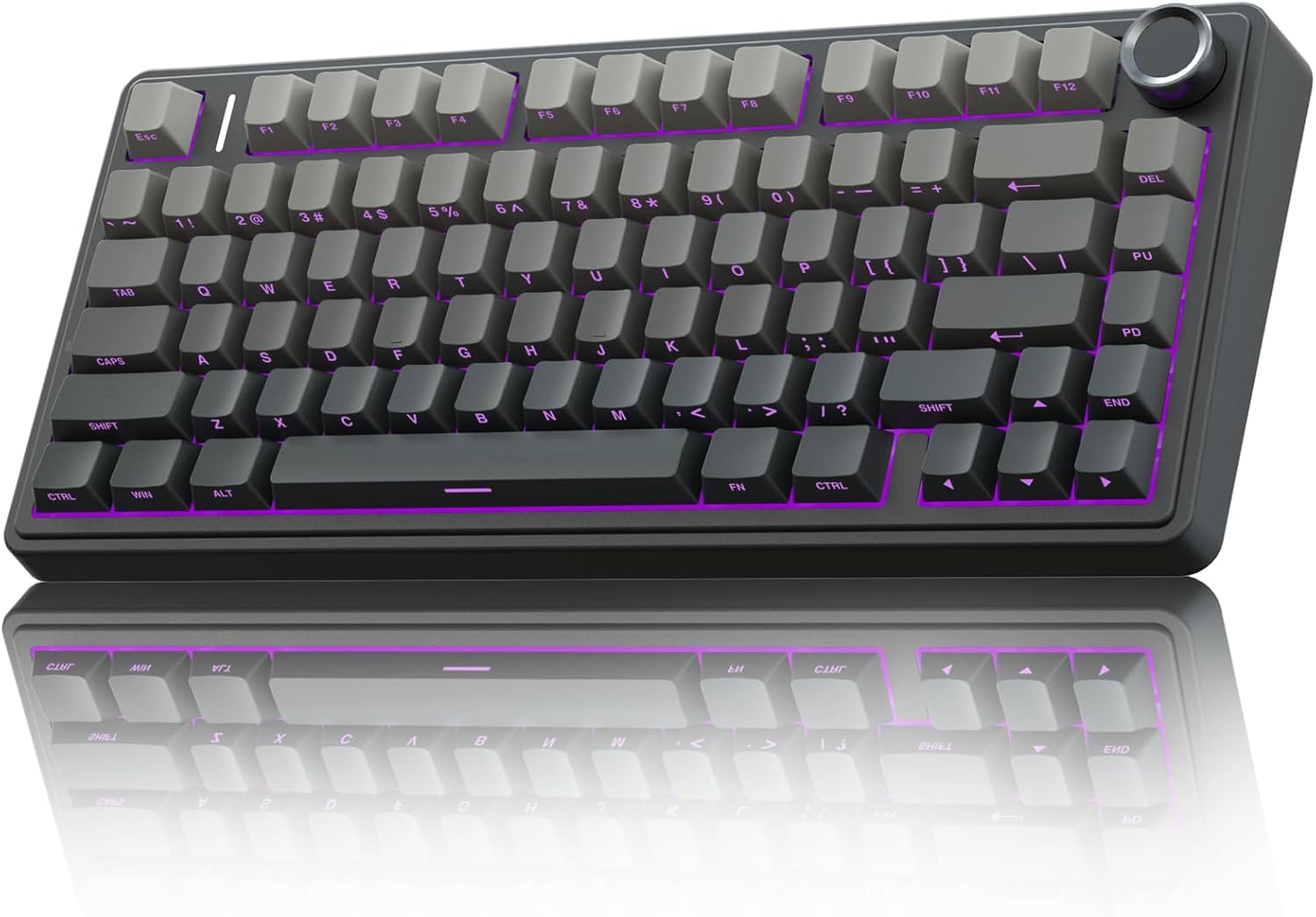
AULA F75 Pro
Gasket mount, pre-lubed Leobog Reaper switches, absurd battery life
Visit on Amazon →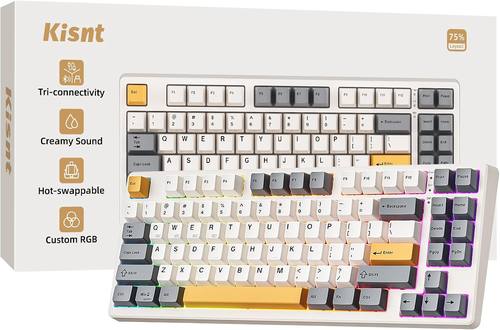
Kisnt KN85 Wireless Mechanical Keyboard, 75% Layout, Bluetooth/2.4GHz/USB-C, ...
KN104 | Full-Size KN98 | 96% Compact-Num KN85 | 75% Compact KN85 | 75% Compact KN85 | 75% Compact KN85 | 75% Side-Print
Visit on Amazon →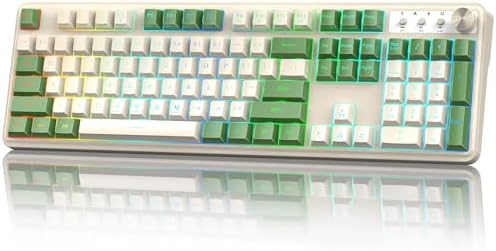
Redragon K521 Upgrade Rainbow LED Gaming Keyboard, 104 Keys Wired Mechanical ...
Full-size layout, rainbow backlight, dirt cheap
Visit on Amazon →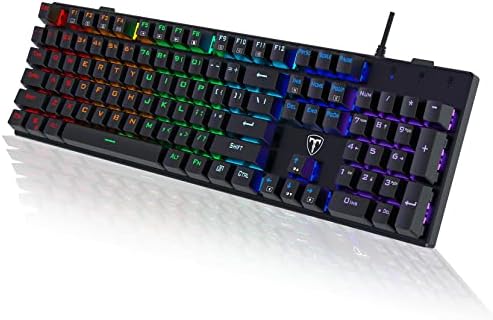
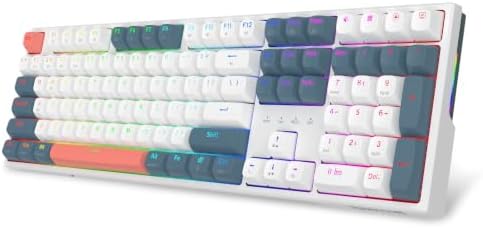
Redragon K668 108-Key Hot-Swap Wired RGB Gaming Keyboard, Extra 4 Hotkeys
KN104 | Full-Size KN98 | 96% Compact-Num KN85 | 75% Compact KN85 | 75% Compact KN85 | 75% Compact KN85 | 75% Side-Print
Visit on Amazon →Why you should trust me
I'm Theo. I've been a software engineer for a decade, which means I've typed roughly 20,000 hours of code, emails, and angry Slack messages. I started with an RK61 that made my ex-girlfriend leave (fair trade, honestly), and I've since built 14 custom boards, lubed more switches than I care to count, and developed a stabilizer rattle test that has ended friendships.
My 65-pound labradoodle Ollie sleeps next to my desk while I type, and he's knocked exactly one keyboard off it.
I still miss that board.
How I picked
My criteria are simple and non-negotiable. First, the board has to survive two full weeks of daily work. I write code for 8 hours a day, so if a keyboard can't handle a sprint of debugging and refactoring, it fails.
Second, the stabilizers cannot rattle. I press the spacebar, backspace, and enter at different speeds and angles, and if I hear anything that sounds like a plastic spork on a Tupperware lid, the board is dead to me.
Third, hot-swap is mandatory. In 2026, there's no excuse for soldered switches on a board over ~$50. Finally, I check the battery life claims against reality.
I've had boards that advertised 300 hours and died in three days.
Our pick: AULA F75 Pro
The first thing you notice is the thock. Not the cheap, hollow clack you get from most budget boards, but a deep, satisfying bottom-out that makes you want to type things you don't need to type. I found myself writing grocery lists, lorem ipsum paragraphs, and passive-aggressive notes to my roommate just to hear it sing.
And it's heavy. Reviewers note it "won't bounce around if you slam keys," and they're right. The dense plastic case doesn't show fingerprints, and the weight keeps it planted on my desk even when I'm hammering out a particularly frustrating API integration.
The battery is where this board gets weird. One reviewer wrote that it "runs on wizard energy," and that's the most accurate thing I've ever read about a keyboard battery. I kept checking the percentage because it refuses to go down. With RGB off, you'll get weeks. With RGB on, expect less than a week, but that's physics, not a flaw.
Flaws but not dealbreakers: The keycap legends are south-facing. "Letters on key cannot be seen from top" is a complaint in nearly every review, and it's legitimate. If you look down at your keys, this will drive you insane. If you're a touch typist, it won't matter at all. The case also reads as slightly plastic-y despite the weight. Not cheap, but not metal.
If you're on an RK61 or any other budget board and wondering if this is an upgrade, the answer is yes. Owners call it a "HUGE upgrade," and one said the quality "exceeds my expectations by several miles." At around ~$60, this is the board I recommend to anyone who wants to know what the hobby is about without spending a paycheck.
Runner-up: Kisnt KN85
The Kisnt KN85 is the board that surprised me. I'd never heard of the brand, which usually means I'm about to be disappointed. Instead, I got a 75% layout with a solid aluminum build that feels like it costs twice as much. The gasket mount is done right, and the pre-lubed switches are quiet and smooth.
What sets the KN85 apart is the versatility. It supports Bluetooth, 2.4 GHz, and wired connections, and the toggle between them is instant. I used it for a week on Bluetooth with my MacBook, and the connection never dropped once. The hot-swap sockets accept standard 3-pin and 5-pin switches, so you can experiment with different switch types without breaking out a soldering iron.
The sound signature is closer to clacky than creamy, but it's a refined clack, not the sharp, hollow sound you get from cheaper boards. The stabilizers are decent out of the box, though not as smooth as the AULA's. You might want to lube them after a few months.
Flaws but not dealbreakers: The software is basic. You can remap keys and adjust RGB, but the interface feels like it was designed in 2018. Also, the keycaps are OEM profile, which means they're a bit shorter than the Cherry profile I prefer. It's a minor quibble, and you can swap them out for ~$20 if it bothers you.
If you want a board that can move between your desk, your laptop bag, and your couch without skipping a beat, the KN85 is the one.
Budget pick: Redragon K521
At ~$35, the Redragon K521 is the board you buy when you need something functional and you need it now. It's a full-size 104-key layout with rainbow backlighting that cycles through colors without any software. No drivers, no configuration, just plug and play.
The switches are Redragon's own red linear, and they're... fine. Not great, not terrible. They're scratchy on the downstroke, but they don't have the ping that plagues cheaper boards. The stabilizers rattle on the spacebar, which fails my test, but at this price, I'm willing to forgive it.
Here's the thing about the K521: it's not a board for enthusiasts. It's a board for someone who needs a keyboard and doesn't care about sound signatures or gasket mounting. It's the board you'd buy for a spare office setup or for a kid who's about to spill soda on it.
Flaws but not dealbreakers: The switches are soldered, not hot-swap, so you're stuck with the red linear feel. And the rainbow backlighting is not RGB, which means you can't customize individual keys. But for ~$35, you're getting a full-size board that works. That's the deal.
If you need a cheap, reliable keyboard and you're not ready to go down the mechanical rabbit hole, the K521 will get you through.
The competition
The Redragon K668 is a 108-key hot-swap board with four extra macro keys on the left side. It's a good concept, but the extra hotkeys sit exactly where your pinky rests, and I accidentally hit them constantly during my first week.
The sound signature is clacky, and the plate is stiff, so there's none of the flex you get from gasket-mounted boards.
At ~$45, it's a decent value, but the AULA and Kisnt both beat it on feel.
The RisoPhy is an ultra-slim keyboard that looks like a Mac keyboard but with mechanical switches. The problem is the switches are low-profile, and they feel like a compromise. The key travel is shallow, and the sound is closer to a laptop keyboard than a mechanical. At ~$30, it's cheap, but it doesn't deliver the tactile experience that makes mechanical keyboards worth buying.
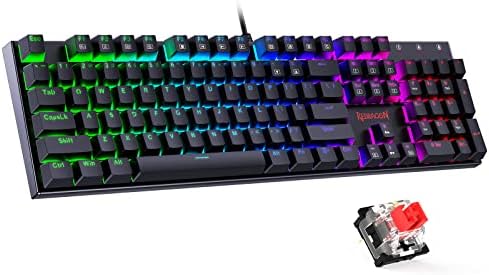
The **Redragon Mechanical Gaming Keyboard** is a wired 11-key programmable board that I didn't include in the main picks because it's more of a gaming peripheral than a typing tool. The switches are decent, but the software is basic, and the keycaps feel thin. It's not a bad board, but the AULA does everything better for ~$15 more.
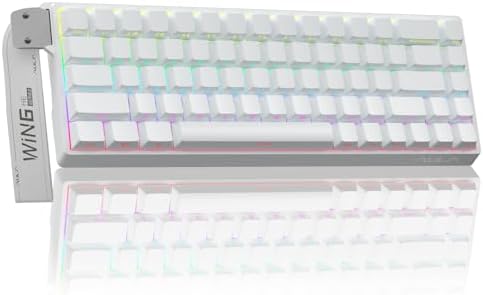
The AULA WIN68 HE is a Hall Effect magnetic switch board, which is a fascinating technology that uses magnets instead of springs to register keystrokes. The problem is the 60% layout has no arrow keys and no function row, which makes it nearly unusable for my daily work. It's a gaming board, and I don't review gaming boards as gaming peripherals.
The bottom line
If you want the best budget mechanical keyboard that doesn't suck, get the AULA F75 Pro. It's the board that made me stop reaching for my ~$200 customs. The gasket mount, the pre-lubed switches, and the wizard-energy battery life make it the clear winner. If you need something that's wireless-first and doesn't mind a slightly clackier sound, the Kisnt KN85 is a close second.
And if you're on an RK61 wondering if it's time to upgrade, it is. The AULA makes the RK61 feel like a toy. Ollie agrees, and he's knocked exactly one keyboard off my desk in his life. He's never touched the AULA. That's the highest praise I can give.